


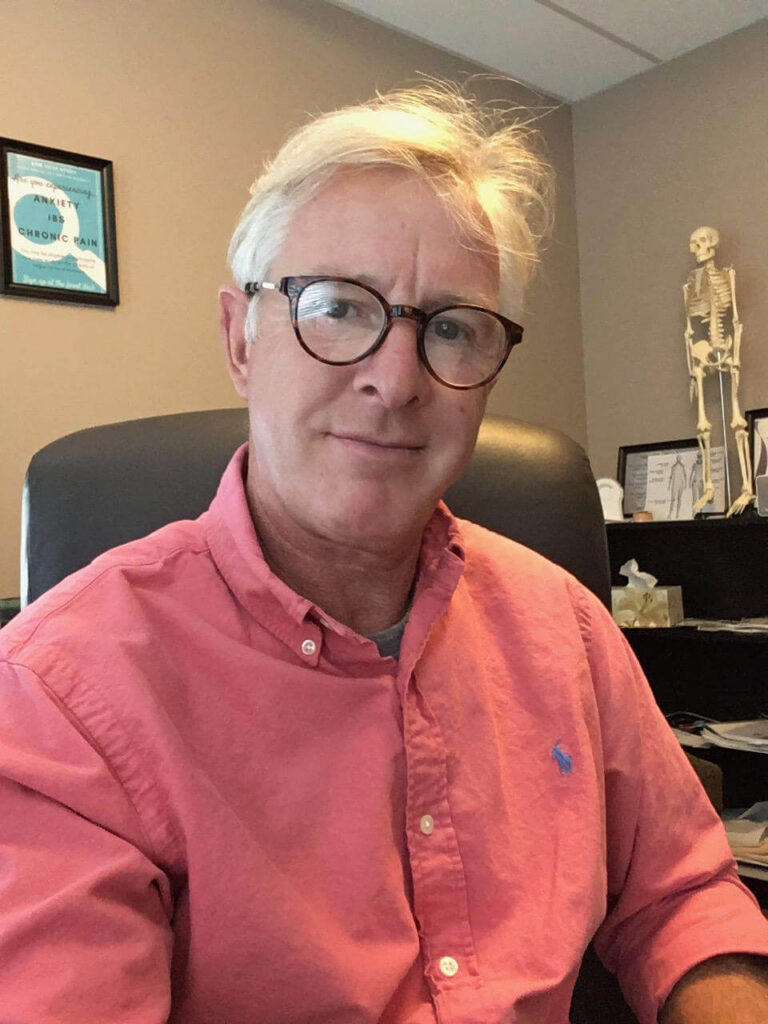
About Pascal Grolaux
Pascal Grolaux graduated in osteopathy from the John Wernham Academy of Classical Osteopathy (JWACO) (B) in association with the Maidstone College of Osteopathy (JWACO/MCO) (UK) (1995) and from the Ecole Suisse de Médecine Ostéopathique, Master Ost. in 1994. He was teacher in applied anatomy and applied neurology and clinic assistant at the JWACO clinic (B) and later in neuro anatomy, neuro semiology and neurology at the Institut pour la Formation en Ostéopathie Grand Avignon (IFOGA), France.
He was Member of the French Task Force (CEN/TC 414) (EN16686) for the European Directive on Osteopathic Education. He lectured in International conference and congress (OsEAN, Barcelona 2014, Berlin 2019 Osteopathic Congress) and at the ICO London Conference in 2018. Pascal Grolaux is specialized in neuroscience practicing and doing research in Canada. He is the only osteopath in Nova Scotia, Canada and in Europe who practice non-invasive vagus nerve stimulation in his daily clinic. He does research in non-invasive vagus nerve stimulation (nVNS) in association with Kinesis Associates Clinic, Dartmouth, NS (Canada) and Dalhousie University, Psychiatry Dpt, Halifax, NS (Canada) and in applied neurology with international co-authors.
Description
The course will focus on the complex neuromodulation of the neurovisceral integrative model that intimately connects the brain to the heart, as enunciated more than 160 years ago by Claude Bernard and reviewed recently to detail the role of the central autonomic network described as an integrated functional unit through which the brain controls visceromotor, neuroendocrine, neuroimmune, behavioral and emotional responses that are critical for psychophysiological adaptability.
We will see how stressors (internal and external) affect the sympatho-vagal balance, modulates cognitive, behavioral, emotional, visceral and endocrino-immune processes, and disrupt the body homeostasis.
You will learn how to analyze the sympatho-vagal balance and why and how an osteopathic treatment could affect it in order to restore and maintain body homeostasis.
Organization of the course
Day 1:
Day 2:
Day 3:

 Apparaat
 Google
 Outlook (online)